I was in tears and yet I was happy to know that I was in his heart for all those years. He was my first love and we tried to light the fire again. We saw each other a few more times and one day Vince called me from the Santa Anita racetrack. When I learned about his addiction to gambling on horses, the spark faded. It was not a happy ending like in the Hollywood movies. Sometimes it’s better to leave the good, old feeling where it was and bring it out with a smile from time to time. Life is to go forward.
an excerpt from the book
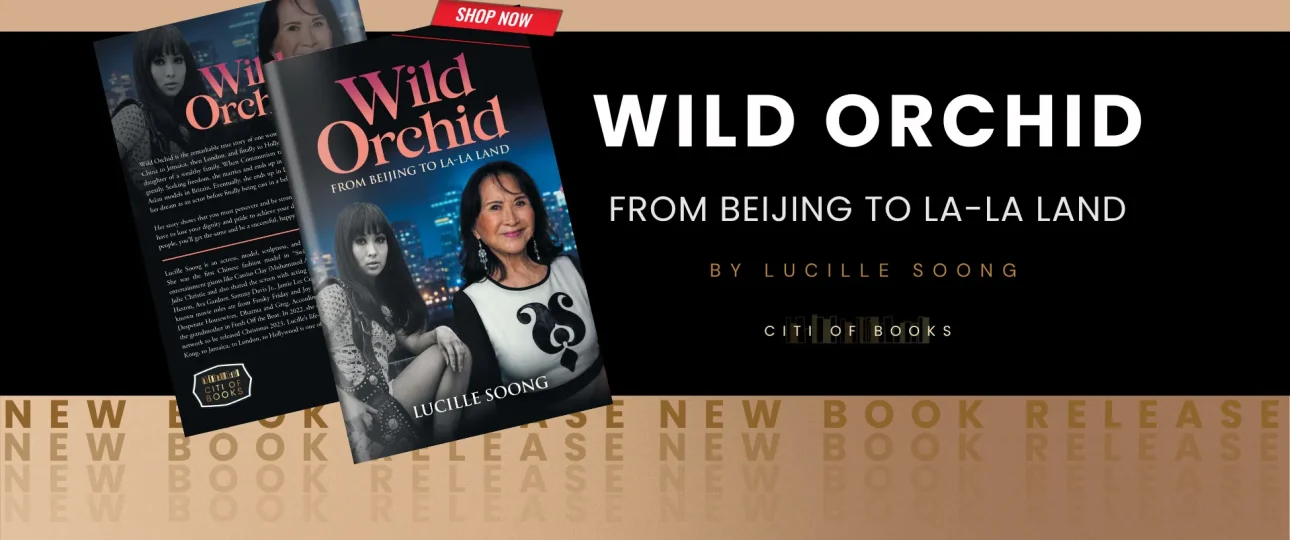
Some life stories are defined by one place, one profession, or one defining moment. “Wild Orchid: From Beijing to La-La Land’’ is anything but that. Written by Lucille Soong, this memoir follows an extraordinary journey from childhood in China through marriage, migration, adventure, modeling, acting, business, real estate, friendships, heartbreak, and eventually a long career in Hollywood. Proudly published by Citi of Books, this is now available on Amazon, Barnes & Noble, and other major retail platforms.
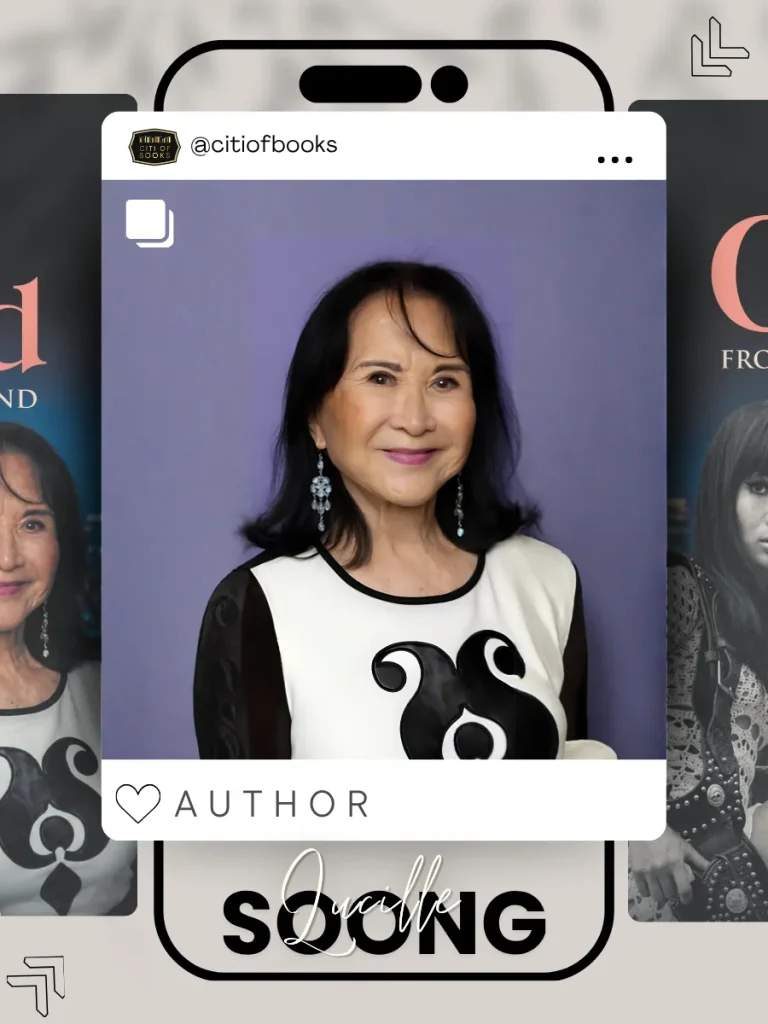
Lucille Soong tells her own story in Wild Orchid, drawing from memories that stretch from childhood in China to her experiences across Asia, the Caribbean, Europe, and the United States. Her path included teaching, business, modeling, acting, real estate, and decades of navigating unfamiliar environments. Her acknowledgment explains that actress Elizabeth Sung encouraged her to write down the important events of her life after they worked together on The Joy Luck Club. Although Soong was initially reluctant because she did not feel skilled in English, Sung’s encouragement eventually helped inspire the memoir.
The book is deeply personal, but it is also filled with humor, unexpected encounters, cultural observations, and the determination to keep moving forward even when life takes an unexpected turn. The book itself is organized into nine chapters that trace Soong’s life across several countries and cities.
The story begins in China, where Soong looks back on her childhood in Tianjin and Shanghai. Born into a relatively affluent family, she grew up surrounded by parents, siblings, grandparents, servants, and traditions that shaped her understanding of family and society. Her childhood was interrupted by war and political upheaval. The Japanese invasion of Tianjin in 1937 forced her family to confront danger and uncertainty, while later political changes under Communist rule dramatically altered their lives. Her father’s businesses were confiscated, her brothers faced restrictions on their education, and Soong herself was assigned to study coal mine engineering despite wanting to pursue English or art.
It is a story about growing up during periods of enormous historical change, leaving familiar places behind, navigating relationships, discovering unexpected talents, entering the entertainment industry, facing discrimination and rejection, building new careers, and continuing to reinvent oneself. Soong’s willingness to recount both the glamorous and difficult sides of her experiences gives the book its distinctive personality.
Soong’s connection to acting began almost by accident. After arriving in Hong Kong, she was selected for a role in Ferry to Hong Kong. She had no formal acting training and did not originally imagine herself becoming an actress, but the experience introduced her to the world of filmmaking. Her recollections of working around figures such as Orson Welles and director Lewis Gilbert capture her curiosity as she learned the unwritten rules of film sets. One memorable episode involves a seemingly simple handbag becoming an important continuity issue, while another shows Soong standing up for herself when she discovered that a fellow actor was being paid twice as much for similar work.
Her opportunities continued to expand. In Spain, she worked on 55 Days at Peking, a historical drama featuring major Hollywood stars. While the role itself was small, the experience opened other doors. She entered a Miss Oriental contest connected to the film’s publicity and won the title “Señorita Oriente.” Her photographs were subsequently published in Spanish newspapers and magazines, and three pages of her photographs appeared in Look Magazine.
London became another important stage in Soong’s life. The memoir captures the energy of the 1960s, from the rise of The Beatles and Mary Quant’s miniskirts to the changing social atmosphere surrounding young people. Her acting career developed through appearances in films and other productions, including Darling, Marco Polo, and The Mini Mob. She also describes missed opportunities, difficult agents, auditions, and the lessons she learned about persistence and advocating for herself. At one point, she reflects on turning down or losing opportunities because her representation did not consider certain roles worthwhile, eventually realizing that she needed to make different choices about her career.
The memoir is also filled with the kinds of stories that make a reader stop and wonder what could possibly happen next. From childhood memories in wartime China to encounters with filmmakers and performers, from Jamaica and London to Hollywood and San Francisco, Soong’s life repeatedly takes unexpected turns. Her experiences reveal a woman who is curious about the world, unafraid of adventure, and determined to make something meaningful out of whatever circumstances she encounters.
Ultimately, “Wild Orchid: From Beijing to La-La Land” is a celebration of movement, reinvention, and persistence. Lucille Soong’s journey shows that a person’s path does not have to follow a straight line. Sometimes a setback leads to another country, an unexpected meeting leads to a career, and a seemingly impossible dream simply takes longer than expected. For readers who enjoy memoirs filled with history, travel, entertainment, colorful personalities, personal challenges, and remarkable life experiences, this book offers a fascinating journey from one side of the world to another, ending in the bright lights of Hollywood.
Grab your copy of “Wild Orchid: From Beijing to La-La Land” by Lucille Soong through the buttons below: