
Birds normally molt twice a year and spring being one of those times. When they molt, their feathers look tattered and rough until they are preened. His feathers are ruffled and ragged, but it is April, and he could be molting which means new feathers would be coming in and the old worn feathers falling out which means he will have feathers everywhere! once he is done molting.
an excerpt from the book
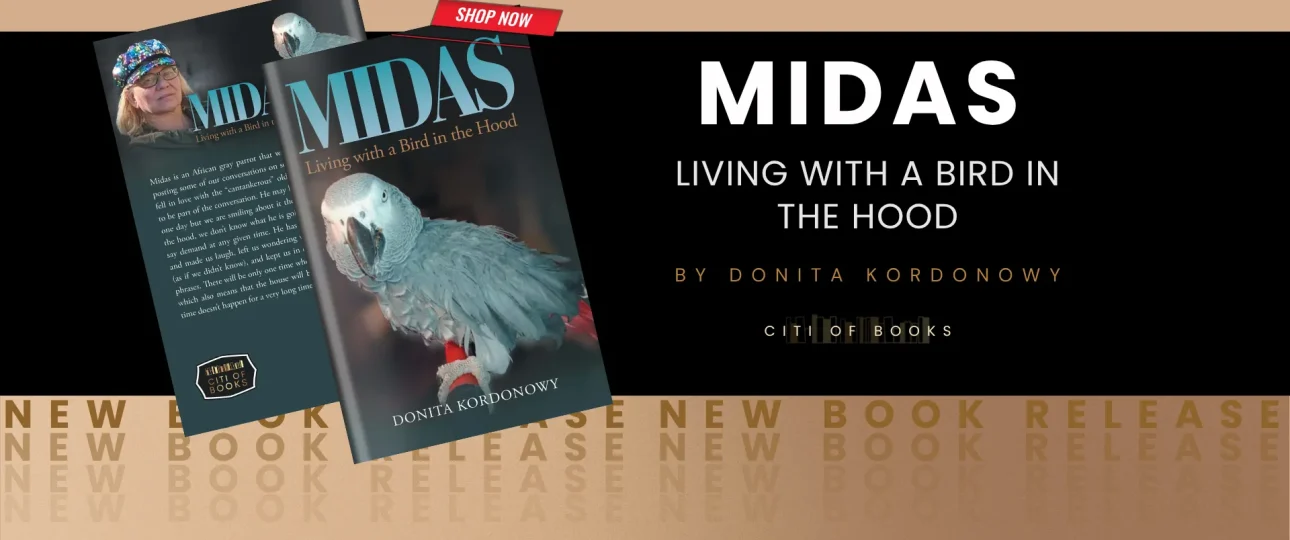
Some animals become part of a household. Others somehow become the household’s loudest, funniest, and most opinionated member. In “Midas Living with a Bird in the Hood,” Donita Kordonowy introduces readers to Midas the Second, an African Gray parrot whose sharp personality, unexpected comments, and remarkable ability to imitate voices turn everyday life into a collection of unforgettable stories. Proudly published by Citi of Books, this is now available on Amazon, Barnes & Noble, and other major retail platforms.
Donita Kordonowy’s experience with animals is central to the book. She writes from more than twenty-five years of working with parrots and describes rescuing birds, evaluating their behavior, helping place suitable birds into homes, and eventually opening her own bird store. She also brought a large collection of animals with her when she moved to Rochester, including two children, three dogs, and approximately fifty birds. Her experiences with Midas the First, whom she lost after a furnace failure during a particularly cold winter, also help explain why Midas the Second became such a meaningful addition to her family.
Her connection with parrots extended beyond caring for them at home. In 2011, Kordonowy was invited to give a presentation about parrots for AARP and brought Midas the Second along. Although Midas did not speak during the presentation, the trip itself became another memorable Midas story, with the parrot repeatedly questioning whether Angel, who was driving, was lost.

The book is based on Kordonowy’s real experiences with Midas, her family, and the many animals that share her home. She makes it clear from the beginning that Midas’ story is told using his actual words and is not edited for children because his vocabulary can be quite colorful.
Midas arrived in Kordonowy’s home in Rochester, New York, in April 2007 after a family friend learned that an African Gray parrot was about to be released outside because no one had claimed him. Almost nothing was known about his past. His name, favorite foods, toys, and even whether he could talk were mysteries. Kordonowy, however, already had more than twenty-five years of experience working with parrots, including rescuing birds and helping determine what kind of environment would best suit them.
“Midas Living with a Bird in the Hood” stands out because it does not try to turn Midas into something he is not. He is loud, unpredictable, sarcastic, mischievous, and sometimes downright difficult. Yet underneath the humor is a genuine portrait of the bond that can develop between people and animals. Kordonowy does not simply write about owning a parrot; she documents years of shared experiences and preserves the strange, spontaneous conversations that made Midas such an important part of the family.
For animal lovers, readers who enjoy humorous true-life stories, and anyone who has ever shared a home with a pet whose personality seems bigger than the room, “Midas Living with a Bird in the Hood” offers an entertaining and heartfelt look at one unforgettable African Gray. It is a celebration of the unexpected characters animals can become in our lives, proving that sometimes the best family stories come from the member who cannot hold a pen but certainly knows how to get the last word.
Grab your copy of “Midas Living with a Bird in the Hood” by Donita Kordonowy through the buttons below: