Algunas personas que viven en el «barrio» utilizan esa palabra para definir su vecindario con emociones que expresan un orgullo muy apasionado. Sin embargo, no es raro que los no residentes utilicen «barrio» para referirse a un vecindario pobre y plagado de delincuencia. No es un lugar preferido para vivir.
Some people who live in the "barrio" use that word to describe their neighborhood with emotions that express deep, passionate pride. However, it is not uncommon for non-residents to use "barrio" to refer to a poor neighborhood plagued by crime. It is not a preferred place to live.an excerpt from the book
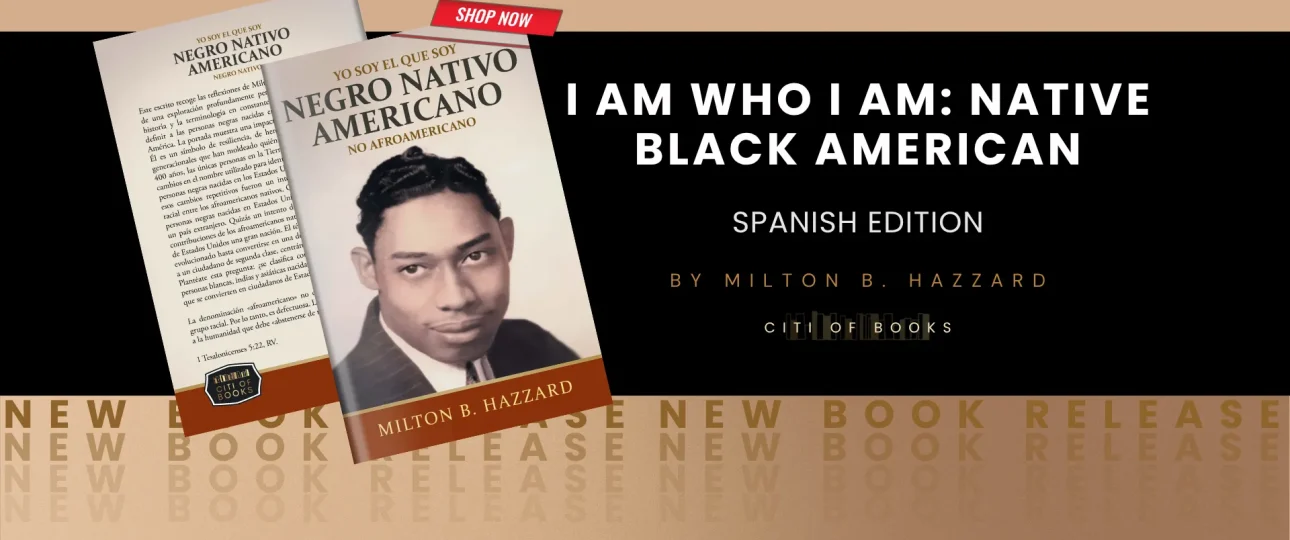
Milton B. Hazzard’s “I Am Who I Am: Native Black American” (Spanish Edition) offers a compelling argument for rethinking the conventional label of “African American” for Black individuals born in the United States. The book’s cover, featuring a striking image of Hazzard’s father, serves as a powerful emblem of resilience and the deep-rooted heritage that has influenced his identity across generations. Published by Citi of Books, this is now available on Amazon, Barnes & Noble, and other major retail platforms.
Milton B. Hazzard Jr. dedicated 35 years of his life to the United States Army, enlisting in 1960 and rising through the ranks to become a Command Sergeant Major (CSM). He served in various roles, earning the respect of officers from 2nd Lieutenant to 4-Star General, who recognized him as one of the “best of the best.”
Hazzard’s exceptional service led to his selection as one of only seven CSMs worldwide to be retained for 35 years of active duty, and he was a finalist for Sergeant Major of the Army. His distinguished military career includes service as the Quartermaster Regimental Command Sergeant Major; a role he continues to fulfill as Regimental Command Sergeant Major (emeritus) after retirement.
As a Vietnam War veteran, he served both domestically and abroad, earning the Parachutist and Air Assault badges, along with numerous awards, including the Bronze Star Medal with three oak leaf clusters.
Beyond his military achievements, Hazzard was inducted into the Quartermaster Hall of Fame and the United States Army Noncommissioned Officer Leadership Center of Excellence and Sergeants Major Academy Hall of Honor in 2021. He also served his community as an ordained Deacon, faithfully serving God as Chairman of the Deacon Board for 12 years.
“I Am Who I Am: Native Black American” proposes “Native Black American” as a more accurate and empowering descriptor, grounding his argument in a rich tapestry of historical, biblical, and sociopolitical analysis.
The book delves into pivotal moments in U.S. history, such as the Emancipation Proclamation and the Three-Fifths Compromise, alongside relevant biblical scriptures, to explore the complex interplay of faith, national identity, and race. Through engaging rhetorical questions and relatable analogies, Hazzard challenges readers to critically examine their own understanding of identity and consider the implications of the language we use to define ourselves.
Hazzard’s passionate voice resonates throughout the book, igniting themes of courage, spiritual strength, and perseverance. He calls for a reevaluation of racial and identity terms, emphasizing the importance of clarity and respect for the unique experiences of Native Black Americans. “I Am Who I Am” is more than just a critique of existing labels; it’s an invitation to embrace and celebrate one’s true heritage.
“I Am Who I Am: Native Black American” by Milton B. Hazzard is a powerful call to action. Hazzard encourages Native Black Americans to embrace a self-defined identity that accurately reflects their unique historical and cultural context within the United States. By promoting pride, independence, and spiritual integrity, his work seeks to inspire a movement that fosters cultural self-respect and highlights the significant contributions of Black Americans beyond the broader narrative of the African diaspora.
Excitingly, “I Am Who I Am: Native Black American” is now available in Spanish, allowing more readers to engage with Milton B. Hazzard Jr.’s perspective on identity, heritage, faith, and history in their native language. This expanded accessibility gives Spanish-speaking readers an opportunity to explore the book’s questions about self-definition and the language used to understand Black American experiences. Whether read in Spanish or English, the book invites thoughtful reflection on heritage, personal identity, and the importance of understanding the stories that shape how communities see themselves.
Este escrito recoge las reflexiones de Milton B. Hazzard Jr. Se trata de una exploración profundamente personal de la identidad, la historia y la terminología en constante evolución utilizada para definir a las personas negras nacidas en los Estados Unidos de América. La portada muestra una impactante imagen de mi padre. Él es un símbolo de resiliencia, de herencia y de las influencias generacionales que han moldeado quién soy hoy. Durante más de 400 años, las únicas personas en la Tierra que han soportado siete cambios en el nombre utilizado para identificar a su raza han sido las personas negras nacidas en los Estados Unidos de América. Quizás esos cambios repetitivos fueron un intento de frenar la unidad racial entre los afroamericanos nativos. Quizás para presentar a las personas negras nacidas en Estados Unidos como ciudadanos de un país extranjero. Quizás un intento de marginar el valor de las contribuciones de los afroamericanos nativos que ayudaron a hacer de Estados Unidos una gran nación. El término afroamericano ha evolucionado hasta convertirse en una denominación que describe a un ciudadano de segunda clase, centrándose en el color de la piel. Plantéate esta pregunta: ¿se clasifica como afroamericano a las personas blancas, indias y asiáticas nacidas en el continente africano que se convierten en ciudadanos de Estados Unidos?
La denominación afroamericano no define claramente ningún grupo racial. Por lo tanto, es defectuosa. La palabra de Dios recuerda a la humanidad que debe abstenerse de toda apariencia de mal.
1 Tesalonicenses 5:22, RV.
Grab your copy of “I Am Who I Am: Native Black American” (Spanish Edition) by Milton B. Hazzard through the buttons below: