
But dementia doesn’t just take memories—it takes executive function, the part of the mind that understands context, makes judgments, and gives meaningful consent. And that’s where things became complicated. There came a point when I realized she no longer fully understood what was happening during intimate moments. She wasn’t distressed—just confused in a way that made it clear she could no longer participate with full awareness.
an excerpt from the book
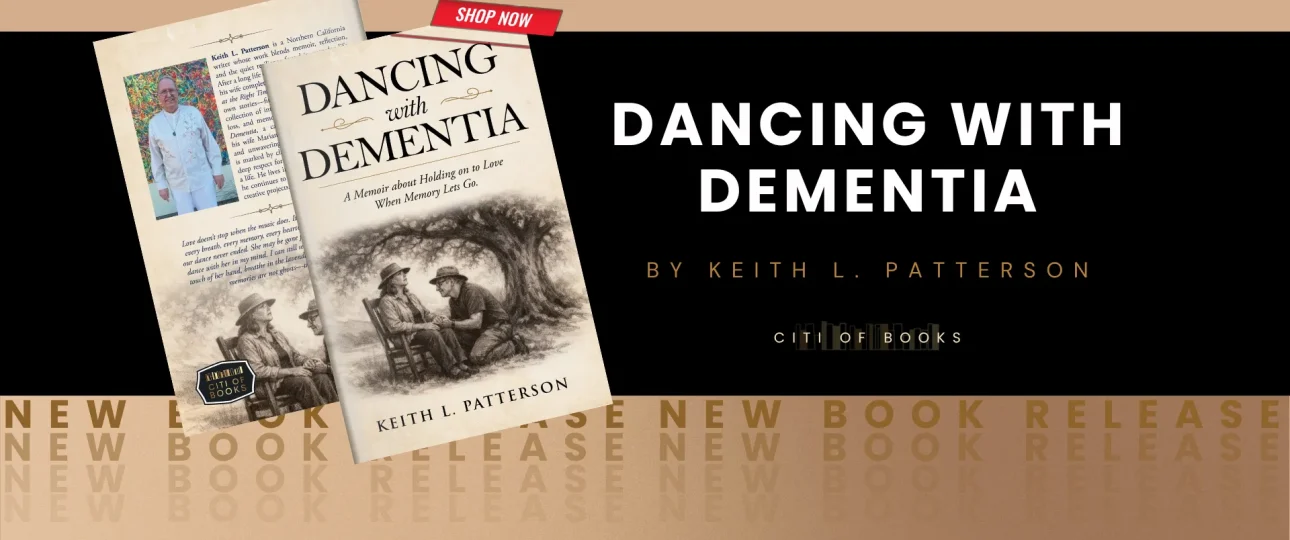
Some journeys change the way a person understands love, patience, marriage, and even the meaning of being present. “Dancing with Dementia” by Keith L. Patterson is one of those deeply personal books. The memoir follows Patterson’s decade-long experience caring for his wife, Marianna, after her diagnosis of Alzheimer’s, offering an honest look at the fear, humor, tenderness, exhaustion, and unexpected joy that shaped their lives together. Proudly published by Citi of Books, this is now available on Amazon, Barnes & Noble, and other major retail platforms.
Keith L. Patterson devoted ten years to caring for his wife after her Alzheimer’s diagnosis. During that time, he actively sought out caregiver education, books, support groups, and practical resources to better understand the challenges facing both himself and Marianna. His experience eventually led him to develop his own approach centered on knowledge, creativity, humor, resilience, and the deliberate choice to find joy wherever possible.
Before Alzheimer’s became part of their lives, Keith and Marianna shared a relationship filled with music, travel, storytelling, and dance. They met after Keith tried an online dating app, quickly discovered a strong connection, and eventually married a little over a year later. Their relationship was built around small traditions, including Marianna’s imaginative stories and Keith’s love songs. They also took dance lessons together and eventually waltzed on stage with the San Francisco Symphony Orchestra during a New Year’s Eve celebration.

Their life changed after Marianna was diagnosed with Mild Cognitive Impairment, which later progressed into early-onset Alzheimer’s and eventually severe dementia. Patterson describes the gradual nature of the disease through the small moments that initially seemed easy to dismiss: repeated questions, forgotten conversations, difficulty remembering familiar information, and changes that slowly became impossible to ignore. Rather than presenting caregiving as something simple or predictable, the memoir shows how quickly a familiar life can require new routines, new skills, and constant adjustment.
What makes this book particularly distinctive is Patterson’s willingness to talk about humor as part of caregiving. When Marianna repeatedly asked the same questions, he learned to turn his responses into little games rather than allowing frustration to take over. He experimented with shorter answers, rhymes, wordplay, and other creative approaches that helped him maintain warmth and patience. The humor was not meant to make light of Alzheimer’s. Instead, it became a way for him to protect their connection and keep resentment from taking control.
“Dancing with Dementia” is more than a memoir about Alzheimer’s. It is a story about adapting when life refuses to follow the plan, protecting someone’s dignity when independence begins to disappear, and recognizing that love can continue even when memories cannot. Patterson does not present his experience as a universal prescription. Instead, he shares the lessons, mistakes, discoveries, and moments of grace that shaped his own caregiving journey. The book also includes a Caregiver’s Tool Kit with resources intended to offer additional guidance and support.
What begins as the story of a husband trying to care for the woman he loves ultimately becomes a reflection on what remains when so much else has changed. Keith and Marianna’s dance may have taken different forms over the years, but its central rhythm never disappeared. Dancing with Dementia reminds readers that even through loss, love can leave behind something lasting: memories that remain warm, meaningful, and alive long after the music changes.
Grab your copy of “Dancing with Dementia” by Keith L. Patterson through the buttons below: