The problem of course centers on the Church. While the Bible says there is one God, one Spirit, and one baptism, the Church in practice, disagrees with that. The Church has invented counterfeit baptisms to musk its disobedience of the command by Jesus to baptize believers (Matthew 28:19).
an excerpt from the book
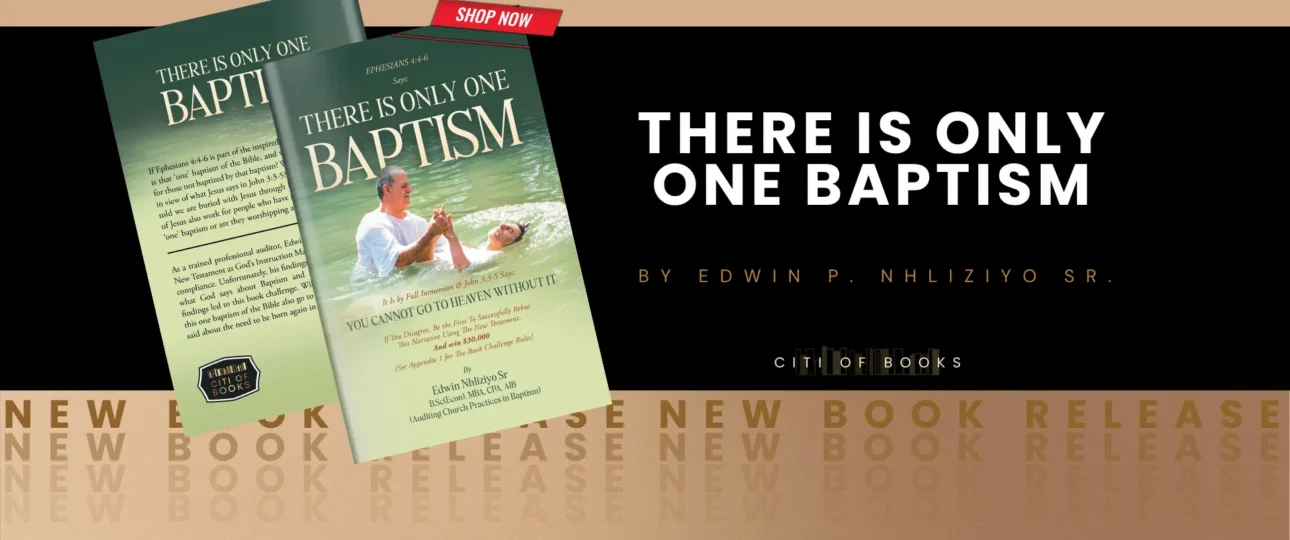
“There Is Only One Baptism” by Edwin P. Nhliziyo Sr. is a passionate and scripture-centered examination of Christian baptism and the theological confusion surrounding its practice within modern churches. Proudly published by Citi of Books, the book is now available on Amazon, Barnes & Noble, and other major retail platforms.
As a trained professional auditor, Edwin Nhliziyo looked at the New Testament as God’s Instruction Manual and was looking for compliance. Unfortunately, his findings show a big gap between what God says about Baptism and church practices. Those findings led to this book challenge. Will people not baptized by this one baptism of the Bible also go to heaven, given what Jesus said about the need to be born again in John 3:3-5?
Drawing heavily from the Bible—particularly the New Testament—the book argues that Christianity recognizes only one true baptism: full immersion in water in the name and example of Jesus Christ as practiced by the early church.
Throughout the book, Nhliziyo challenges practices such as infant baptism, sprinkling, and pouring, arguing that these traditions developed later in church history and do not reflect the baptism model demonstrated in scripture. The author repeatedly calls readers back to what he views as the original biblical pattern established by Jesus and the apostles.
Blending theology, biblical analysis, historical reflection, and direct spiritual appeal, the book becomes both a doctrinal study and a call for believers to examine whether modern church traditions align with the teachings of the Bible itself.
Whether readers agree with the author’s conclusions or not, the book raises important theological questions about authority, interpretation, obedience, and the relationship between scripture and religious tradition.
One of the book’s greatest strengths is its deep engagement with biblical text. Nhliziyo consistently grounds his arguments in scripture, carefully examining passages from Acts, Romans, Ephesians, Matthew, and other New Testament books to support his interpretation of baptism.
The work is also thought-provoking because it confronts longstanding religious traditions directly. By questioning infant baptism, sprinkling, and denominational practices, Nhliziyo encourages readers to examine why churches practice certain rituals and whether those traditions align fully with biblical examples.
Most importantly, “There Is Only One Baptism” lingers because it reflects a larger spiritual desire shared by many believers: the desire to return to simplicity, authenticity, and the foundational teachings of early Christianity. The book ultimately challenges readers to consider not merely what churches teach, but what scripture itself says about faith, repentance, rebirth, and baptism.
Grab your copy of “There Is Only One Baptism” by Edwin P. Nhliziyo Sr. through the buttons below: