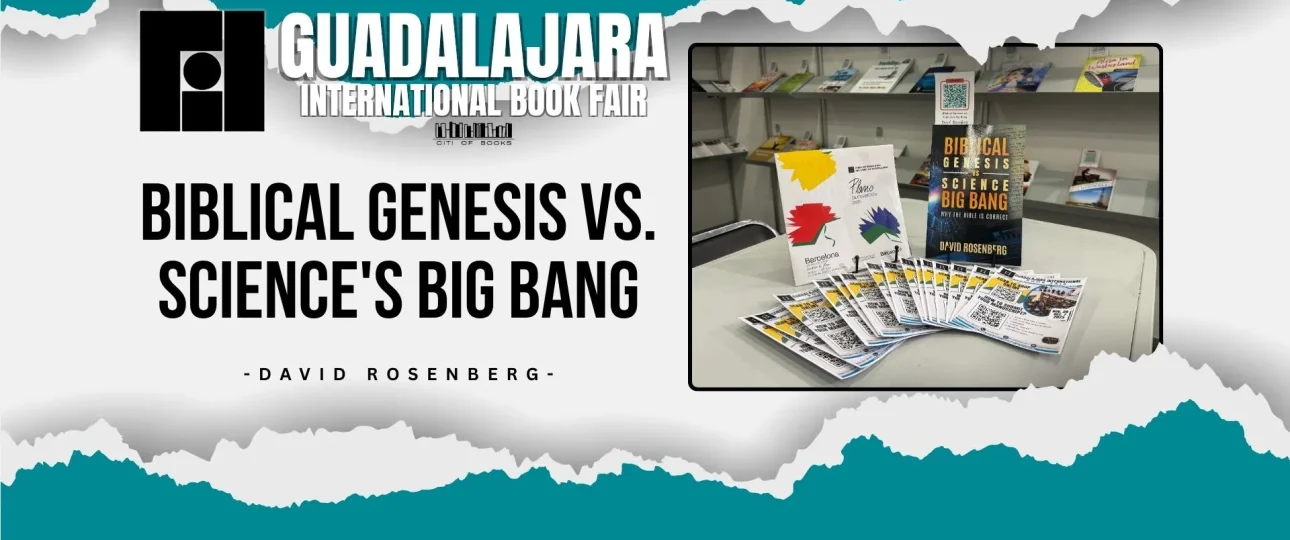

Citi of Books proudly brought the books of our remarkable authors to the heart of the 39th Guadalajara International Book Fair (FIL), turning our space into a lively corner where stories, ideas, and creativity met.
Being part of FIL from November 29 to December 7, in Expo Guadalajara, Av. Mariano Otero 1599, Col. Verde Valle, Guadalajara, Jalisco, meant more than simply displaying books—it meant becoming part of a larger cultural heartbeat. Our gallery served as a bridge between authors and curious readers, offering a close-up look at stories that deserve the spotlight. From powerful biographies to practical guides, and from imaginative fiction to soul-stirring reflections, our curated collection drew in visitors who left with new favorites in hand. And with the vibrant spirit of FIL all around us, every conversation, recommendation, and smile felt like a reminder of why we love sharing books with the world.
With FIL’s electric atmosphere—filled with authors, readers, and cultures from around the globe—our gallery became a warm stop for visitors eager to discover fresh voices and inspiring works. Among the standout titles we showcased was “Biblical Genesis vs. Science’s Big Bang: Why the Bible Is Correct” by David Rosenberg.
David Rosenberg holds a bachelor’s degree in chemical engineering from New York Polytechnical Institute, a master’s in chemical engineering from New Jersey Institute of Technology, and a doctorate degree from SUNY Brooklyn. He has worked for Naugatuck Chemical on polymerization models and for combustion engineering on large chemical plants and nuclear models. After taking advanced physics courses at NJIT and Princeton, he worked with Edward (Rocky) Kalb on nucleosynthesis of the big bang. He used a big bang model based on the Bible to post a number of papers on the internet astrophysics archives. While in the LSU Relativity Group Loni Hyrel 17, he worked on black hole formation models on the computer. At the same time, he preferred a biblically based model that explains dark matter, dark energy, missing antimatter, and everything else.
If you love exploring the big questions—Where did the universe come from? What existed before time began?—then David Rosenberg’s “Biblical Genesis vs. Science’s Big Bang: Why the Bible Is Correct” might just be the book that pulls you in. Rosenberg takes one of the most debated topics in history, the origin of the universe, and flips the conversation upside down. Instead of pitting science and faith against each other, he argues that the Hebrew Bible actually provides the most accurate explanation of creation, far more than modern cosmology has managed so far.
Throughout the book, Rosenberg highlights a major issue he sees in current scientific thinking: the belief in singularities. According to him, this long-held assumption has boxed scientists into theories they can’t fully solve—especially when it comes to black holes and the big bang. While physicists struggle to explain what truly triggered the universe’s beginning, Rosenberg presents a refreshing, faith-rooted alternative. His approach suggests that the ancient Biblical text may hold insights that science has overlooked for decades.
One of the best things about this book is how accessible it is. Rosenberg intentionally keeps most chapters free from heavy equations, letting general readers dive into cosmic mysteries without feeling intimidated. Yet for those who crave deeper scientific grounding, he also includes references to his more technical scientific paper on arXiv.org—proof that his ideas aren’t just inspirational but researched and tested. This mix makes the book ideal for a wide target audience: curious thinkers, Bible readers, science enthusiasts, and anyone who enjoys big, brain-stretching discussions.
Whether you’re a believer, a skeptic, or just someone who loves exploring new perspectives, “Biblical Genesis vs. Science’s Big Bang” sparks the kind of conversation that lingers long after you close the book. It challenges assumptions, invites debate, and reminds us that the search for truth is far from over. In a world where science and faith often clash, Rosenberg dares to bring them together—and the result is a thought-provoking read you’ll want to talk about with everyone.

2 Comments
It’s impressive how the book is getting so much attention at such a prestigious event. Do you think the comparison between the Bible and Big Bang theory is something that could shift how we view both science and religion in the future?
Incredibly helpful post. Thanks for sharing your expertise!