The New York Times Book Review (NYTBR) is a cherished weekly supplement to the Sunday edition of The New York Times, dedicated to the vibrant world of literature. Since its inception on October 10, 1896, the NYTBR has served as a vital resource for readers, offering insightful reviews of both current fiction and non-fiction titles, engaging author interviews, and comprehensive coverage of the ever-evolving book landscape. With a commitment to exploring a wide range of genres, the NYTBR not only highlights the latest literary offerings but also celebrates the enduring power of ideas through the written word.
One of the most influential features of the NYTBR is its publication of the New York Times Best Seller list, a widely cited benchmark for literary success curated by the Times’ “News Surveys” department.
Each year, the NYTBR staff selects standout titles, culminating in lists which guide readers toward exceptional reads. In addition to its print edition, the NYTBR maintains a robust online presence, providing access to book reviews, author interviews, and a wealth of book-related content for literature enthusiasts everywhere. Whether you’re a dedicated bibliophile or a casual reader, the NYTBR is an invaluable companion on your literary journey.
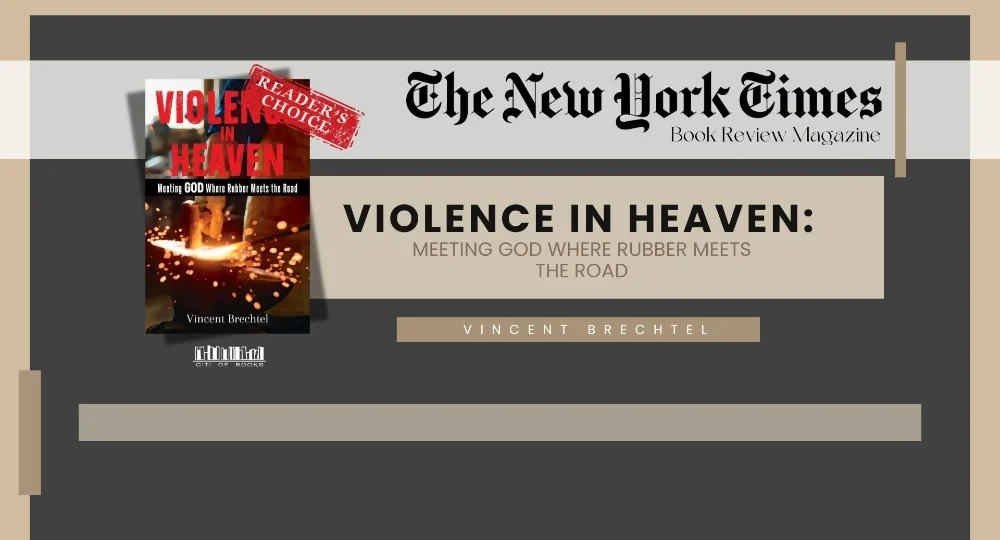
Vincent Brechtel’s book, “Violence in Heaven: And Meeting God Where the Rubber Meets the Road,” was among the books featured in the December 2025 issue of The New York Times Book Review (NYTBR) magazine.
Vincent Brechtel spent three decades chasing a technical career and finding success but not a fulfilling, peaceful sense of well-being, that returning to his family’s homestead farmland has helped him to fully recapture. In all cases, whether within a city or upon remote rolling plains Vincent has ever been guided to seek brotherly fellowship (unity), oneness, across the wide spectrum of Christian faith churches, most fondly, the Cowboy Churches. He retains a notable formal affiliation with the Orthodox Catholic faith, which still has the head bishop residing ‘First Chair of St. Peter’ in Antioch (Syria).
God offers guidance toward renewal and growth in alignment with His will.
“Violence in Heaven: And Meeting God Where the Rubber Meets the Road” by Vincent Brechtel is a thought-provoking exploration that presents a gripping account of a broken man’s candid dialogue with God. This book transcends mere storytelling; it invites readers into a deeply personal encounter that encourages them to reflect on their own faith, suffering, and the journey toward redemption.
The narrative delves into the internal struggles we face, illustrating how God attempts to communicate with us amidst our turmoil. It resonates profoundly with anyone who has grappled with personal challenges. Set against the backdrop of Aspot’s tumultuous life, the story serves as a powerful metaphor for spiritual growth, likening the process to metal being forged and refined by a divine craftsman.
Aspot’s journey begins in the wake of heartbreak and loss, as he navigates the aftermath of a fractured marriage and the end of a long-term job. Riding his aging motorcycle through harsh weather, he reaches a pivotal moment beneath an interstate overpass, where the sight of a mysterious cross sparks a significant spiritual awakening. His path is fraught with challenges, including strained relationships with his children and encounters with dangerous individuals. Yet, moments of divine intervention—unexpected provisions and signs—bolster his developing faith and guide him through life’s obstacles.
As Aspot progresses on his journey, he encounters various individuals who challenge and strengthen his beliefs, underscoring the message that genuine faith requires action, patience, and trust. “Violence in Heaven” emphasizes the importance of confronting life’s trials to cultivate a deep-rooted belief system, making it relatable to anyone facing adversity. A faith-based drama adaptation could vividly illustrate Aspot’s transformative journey, highlighting the metaphor of spiritual growth and the enduring power of faith. Ultimately, the story conveys that through suffering and challenges, individuals can uncover deeper meaning and forge a stronger connection with the divine.