
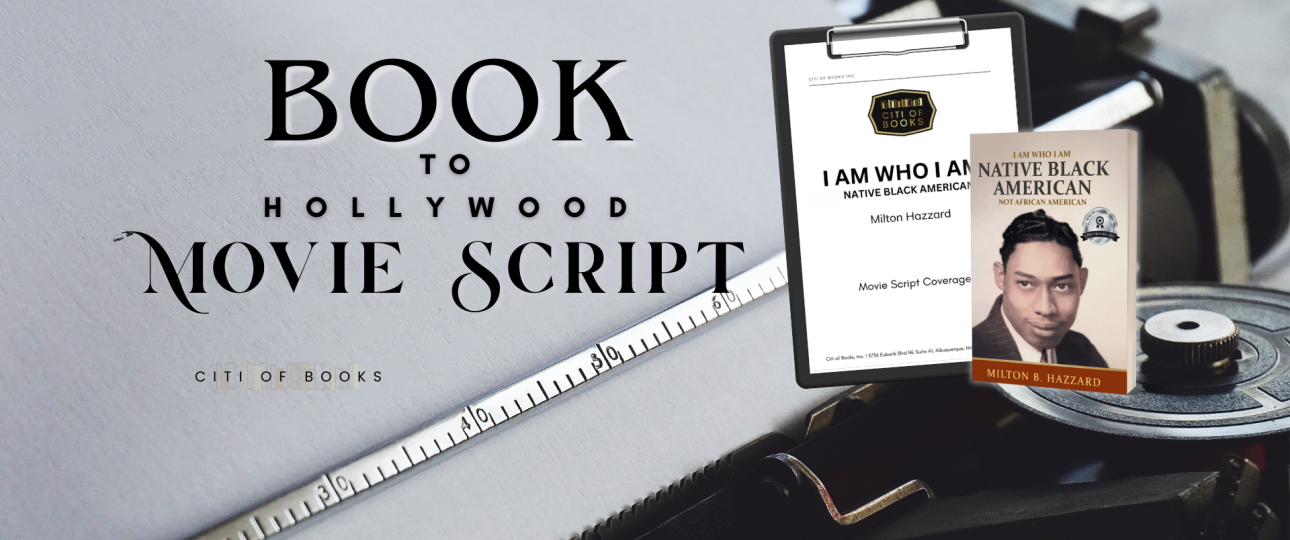

The book “I Am Who I Am: Native Black American” by Milton B. Hazzard received a Hollywood-style script. This story has great potential to be made into an engaging and profitable movie and is likely to do well in the movie industry. Given its detailed narration, it offers a vivid portrayal of the character’s emotions and situations. This not only aims to entertain but also to provoke thought about the changes needed in the way justice is administered and perceived.
The Movie Script Coverage Service is the foundation for writing a screenplay for the author’s book that will be stored in a database for potential movie adaptations by producers who are searching for a new film to adapt. Movie script coverage is a “book report” on a screenplay that contains basic information about the script, a summary of the film or book, and a comments or feedback section that highlights the work’s strengths and weaknesses.
To create a screenplay, an outline or cover of a movie script must first be created. Screenplays are the blueprint for the film that draws individuals into the film industry.
Picture a powerful, emotionally gripping plot that blends historical truths, spiritual insight, and personal discovery. “I Am Who I Am: Native Black American” doesn’t just tell a story—but challenges society to rethink what identity really means. This wouldn’t be your typical history-based drama; it would be an awakening. Think passionate courtroom debates, emotional family revelations, flashbacks to pivotal moments like the Emancipation Proclamation and the Three-Fifths Compromise, all tied together with soul-stirring narrations based on biblical insight. It’s the kind of movie that leaves you thinking long after the credits roll.
Hazzard’s voice feels like a mix of a wise teacher, a pastor, and a thought-provoking friend, making heavy topics feel personal and relatable. Imagine that tone translating to the screen with expressive dialogue—rhetorical questions, moving monologues, and inspiring conversations that tug at both heart and mind. His message about identity, faith, and self-definition has the emotional weight that Hollywood loves, especially when it empowers people to reclaim their story. The script could beautifully highlight the spiritual strength and perseverance that Hazzard emphasizes, showing characters not just surviving history, but shaping history.
What could be improved for the movie version? Perhaps a stronger focus on individual characters and emotional storytelling moments. While the book powerfully explores ideas, adding more personal stories—testimonies of families, children discovering their heritage, elders passing down wisdom—would make the narrative more cinematic and emotionally gripping. These touches would help the audience not just understand the message but feel it. It’s not just about explaining identity; it’s about experiencing it alongside the characters on screen.
“I Am Who I Am: Native Black American” is more than a title—it’s a declaration. A Hollywood adaptation could turn this declaration into a movement, one that sparks conversation, reflection, and cultural pride. The target audience would be thinkers, believers, dreamers, and anyone who has ever questioned, “Who am I really?” With its mix of history, spirituality, and emotional truth, this story has all the ingredients to become a powerful film—one that doesn’t just entertain, but enlightens.
You can purchase the book through the link below:
https://citiofbooks.com/bookstore/historical/i-am-who-i-am-native-black-american/