
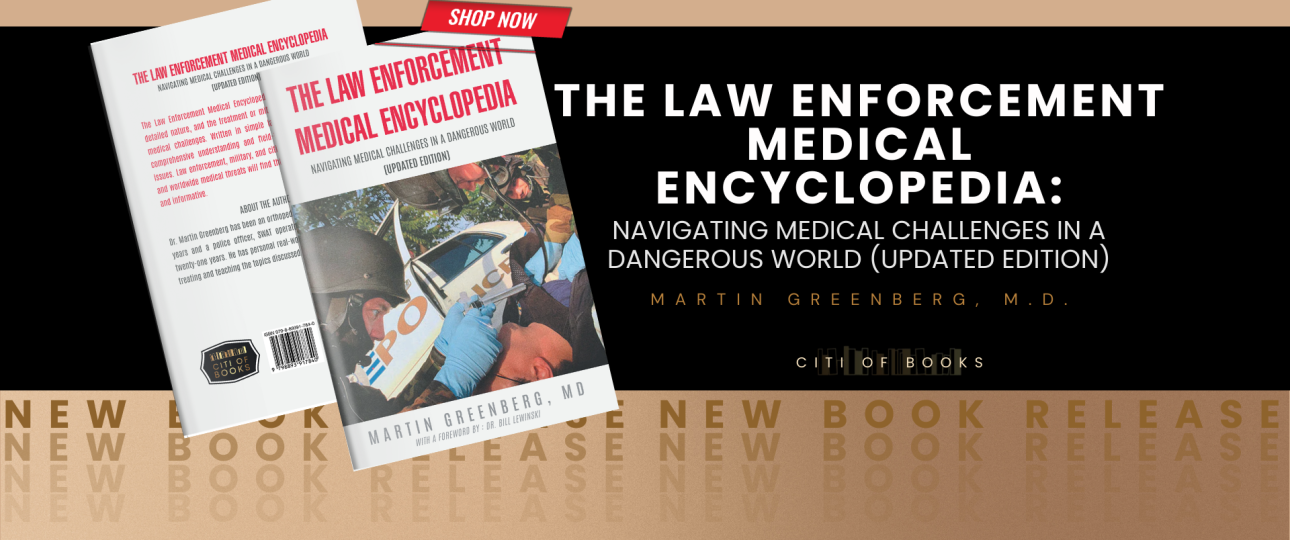
In today’s rapidly evolving field of law enforcement, officers are asked to do more than enforce the law — they are often the first responders in life-threatening medical situations. “The Law Enforcement Medical Encyclopedia” by Dr. Martin Greenberg rises to meet this reality. Written by a seasoned orthopedic trauma surgeon with extensive experience in tactical medicine, this book serves as a crucial bridge between clinical knowledge and street-level application. Officers, trainees, and department leaders will find in these pages not just information, but empowerment.
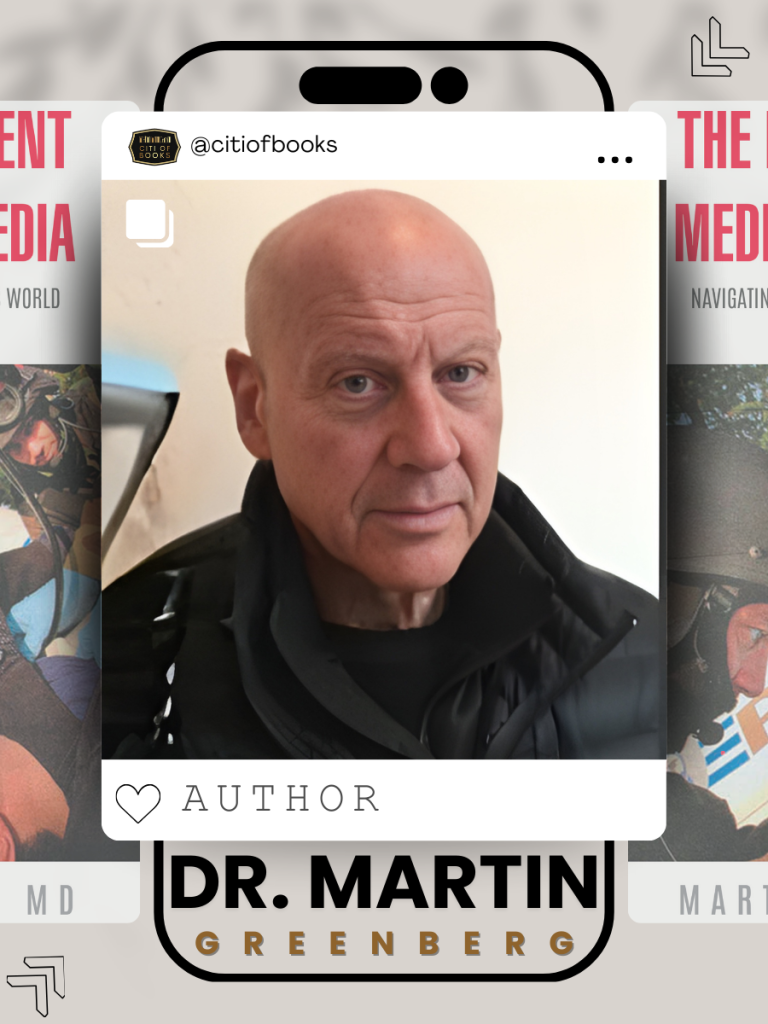
Dr. Martin (Marty) Greenberg has recently retired after a forty-year career as an orthopedic trauma and hand surgeon at a level one trauma center in Chicago. He was born in Brooklyn, New York and resided there until his graduation from Brooklyn College with a Magna Cum Lauda Bachelor of Science degree in Psychology. During high school and college, he was Captain of his schools’ Rie Teams which were varsity sports in New York at the time. His high school team captured the New York City championship in 1968. He then attended Loyola University Medical School in Maywood, IL and sub sequently entered an orthopedic surgery residency program at that institution.
He then began an orthopedic surgery practice in the Chicagoland area until his retirement in 2021. Dr. Greenberg was motivated by the 9/11 tragedy and the Colombine High School mass casualty incident in Littleton, Colorado to help develop the field of Tactical Emergency Medical Support (TEMS) whose goal was to provide medical care inside the inner perimeter of critical incidents. EMS protocols generally did not allow medical care to be rendered inside an inner perimeter until “the scene was safe.”
“The Law Enforcement Medical Encyclopedia” begins with foundational medical knowledge tailored specifically for law enforcement. Dr. Greenberg explains the body’s major systems, the effects of stress on the officer’s physiology, and the immediate consequences of trauma. Unlike standard medical textbooks, this one is intentionally written in language officers can absorb quickly — direct, visual, and action-oriented.
Early chapters teach officers how to recognize critical medical emergencies: severe bleeding, shock, fractures, penetrating trauma, airway obstruction, overdose, and environmental injuries. Each section blends anatomy with tactical understanding. Dr. Greenberg ensures that readers not only learn what is happening in the body but also why it matters for rapid decision-making in the field.
The greatest strength of this encyclopedia is its usability. Officers can flip to any topic — bleeding control, fractures, cardiac events, overdose signs — and quickly find what they need. The layout reflects real-world urgency: clear headings, practical explanations, and scenario-driven context.
The book reinforces that medical preparedness is not optional — it’s a duty. Officers often stand between life and death for victims long before medical personnel arrive. Dr. Greenberg equips law enforcement professionals with the knowledge to respond quickly, calmly, and effectively.
“The Law Enforcement Medical Encyclopedia” is the essential medical companion for today’s officers — a clear, authoritative, and vital resource for anyone committed to protecting life with skill, knowledge, and courage.
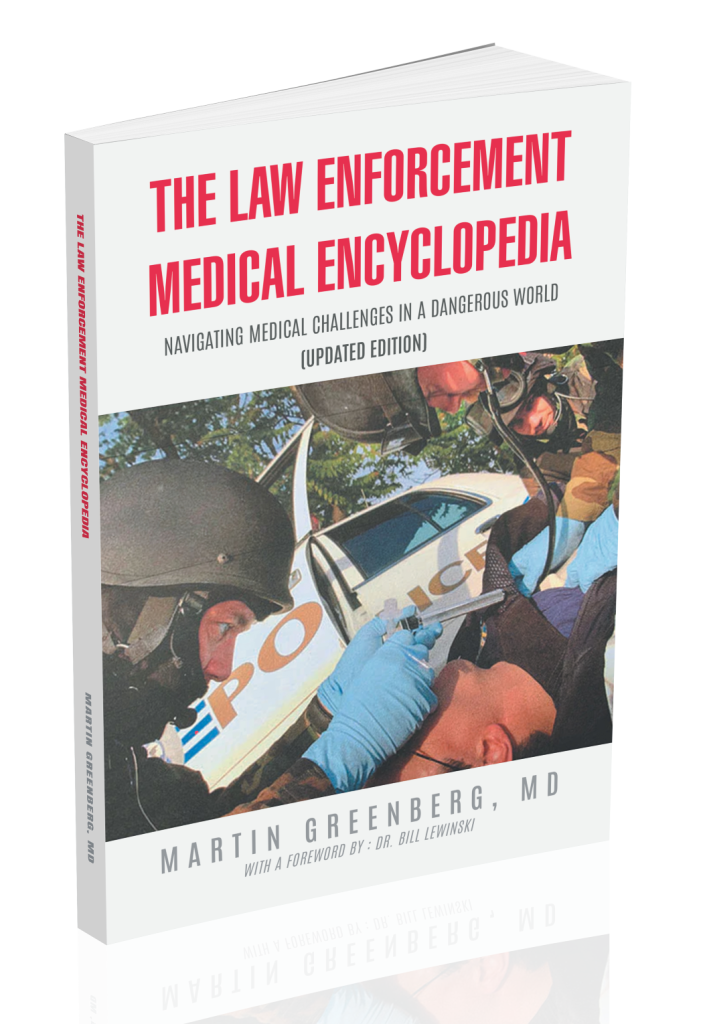
“The Law Enforcement Medical Encyclopedia: Navigating Medical Challenges in a Dangerous World (Updated Edition)” by Martin Greenberg, M.D. is now available for purchase through the links provided below:
2 Comments
It’s interesting to see a medical reference specifically tailored to the realities law enforcement officers face, since they encounter situations that don’t always fit into standard medical handbooks. Having updated guidance for navigating high-risk or unpredictable environments seems especially valuable for both new and seasoned officers. I’m curious how the revised edition addresses emerging medical or situational challenges that weren’t as prominent a few years ago.
Hey, it’s Doc Greenberg. The update in the revised edition is the inclusion of a comprehensive theory of rapid decision making that explains its interactive and interdependent elements that have not been previously related.
This should be of interest to law enforcement, the medical community and the concerned citizen.
Learning under stress happens to all of us every day. Let’s understand it!