
What has happened here is serious. Your client’s firm has converted property of its customers, offered bogus collateral, submitted fraudulent financial statements…And your chief financial officer has submitted fraudulent certificates of compliance. Your firm is in default of virtually every covenant of the loan agreement.
an excerpt from the book
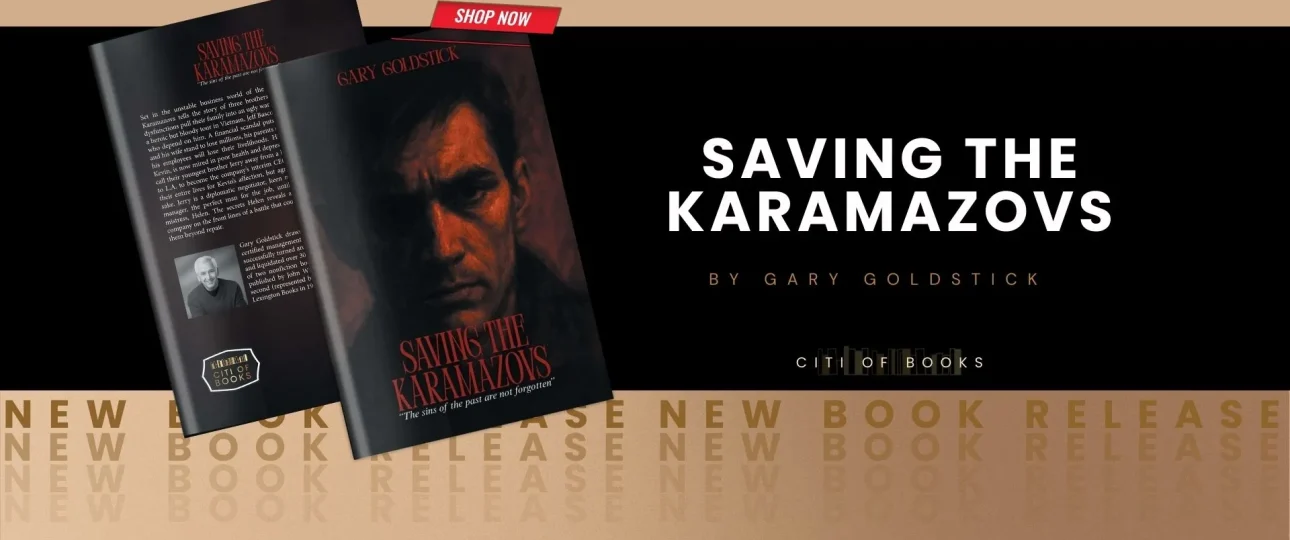
In “Saving the Karamazovs,” Gary Goldstick delivers a deeply layered literary novel that examines family loyalty, moral responsibility, and the haunting cost of intervention. Proudly published by Citi of Books, this is now available on Amazon, Barnes & Noble, and other major retail platforms.
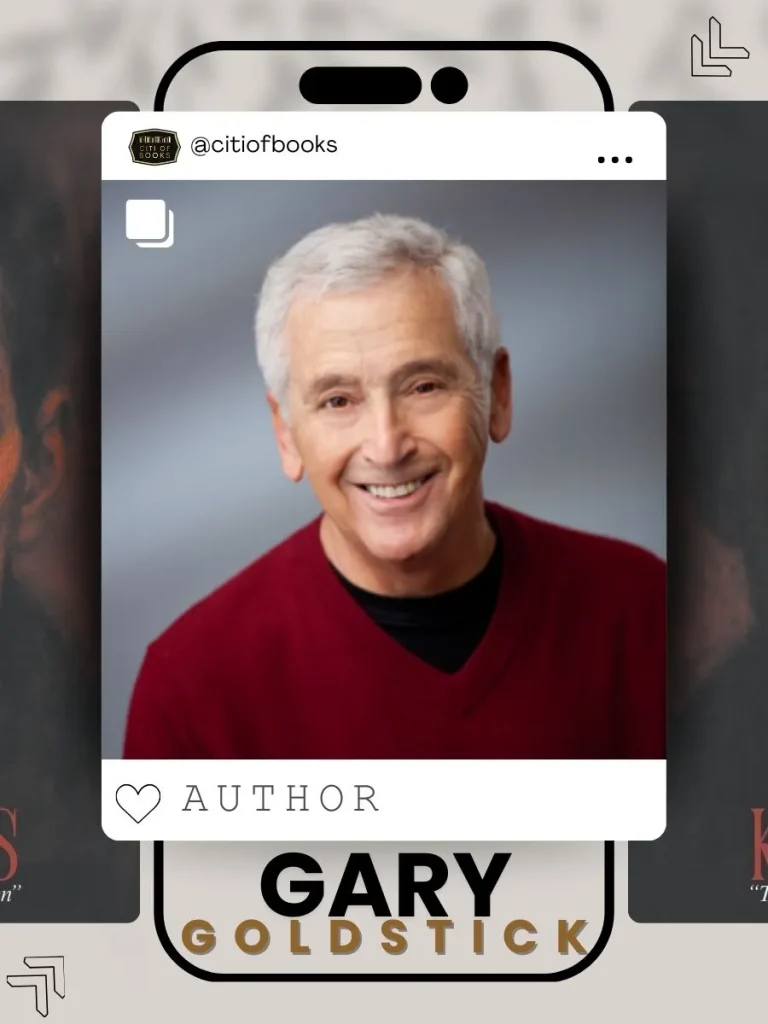
Gary Goldstick grew up in Philadelphia and pursued a strong educational foundation in engineering and business. He earned a BA and BS in Mechanical Engineering from the University of Pennsylvania, followed by an MS in Computer Engineering from UCLA. Early in his career, he worked in computer design for several aerospace companies and founded his own firm in the field. After obtaining an MBA from Pepperdine University, Goldstick embarked on a 35-year career as a certified management consultant.
During this time, he advised, turned around, sold, or liquidated over 300 businesses, bringing decades of real-world experience to his work. Goldstick is also an accomplished author. He has written nonfiction business books, including Business Rx: How to Get in the Black and Stay There (published by John Wiley & Sons) and Romancing the Business Loan: Getting Your Banker to Say “Yes” in the 90s (published by Lexington Books). His first novel, Saving the Karamazov’s, was published in 2011. He leverages his extensive business background to infuse authenticity into his fiction. Goldstick resides in Little Rock, Arkansas, with Sadie, his 26-pound labradoodle.
Set against the intersecting worlds of corporate crisis, wartime memory, and personal betrayal, the novel asks an enduring question: How far can one go to save the people they love without losing themselves in the process?
Rather than retelling Dostoevsky’s The Brothers Karamazov, Goldstick constructs a contemporary narrative that mirrors its moral architecture. The Bascomb brothers—Jeff, Kevin, and Jerry—embody modern incarnations of impulsiveness, intellect, and conscience. This literary echo adds depth without imitation, allowing the novel to stand firmly as an original work rooted in psychological realism.
The story unfolds as Jerry Bascomb is drawn back into his family’s orbit during a financial and moral crisis threatening their company and relationships. As hidden betrayals surface and long-standing resentments ignite, Jerry finds himself positioned as the reluctant mediator—attempting to prevent total collapse while wrestling with the consequences of his own decisions.
At the heart of the novel is Jerry’s return to a family system already fractured by ambition, secrecy, and unresolved trauma. His brothers operate from opposing extremes—Jeff driven by dominance and control, Kevin by anxiety and intellectualization, leaving Jerry to shoulder the emotional burden of restoration. The corporate crisis mirrors the familial one, blurring the lines between professional obligation and personal sacrifice.
As Jerry intervenes, the cost becomes increasingly personal. Romantic entanglements, ethical compromises, and unspoken guilt accumulate, forcing him to confront the uncomfortable truth that saving others often requires betrayal of someone—or oneself. The novel refuses easy redemption, instead offering a raw portrayal of consequence and accountability.
“Saving the Karamazovs” is not about fixing broken people; it is about understanding the cost of trying. With emotional intelligence and literary discipline, Gary Goldstick delivers a novel that lingers long after the final page—asking readers to reflect on their own families, their own loyalties, and the quiet choices that define who we become.
“Saving the Karamazovs” by Gary Goldstick is now available for purchase below:
3 Comments
Interesting to see *Saving the Karamazovs* highlighted here—announcements like this always make me curious about the themes an author is exploring, especially when the title hints at a literary or philosophical influence. It would be great to hear more about what drew Gary Goldstick to this story and how it fits within the broader range of titles featured on the site.
Clear, concise, and packed with value. Thanks for sharing!
Excellent breakdown straightforward and super useful.