The project I worked on was new and innovative; successful for several decades growing large green circles of alfalfa in the Sahara Desert. These green circles were a frequent target for photographs for space shuttle astronauts because the contract between the barren desert sand and the bright green circles was so stark.
an excerpt from the book
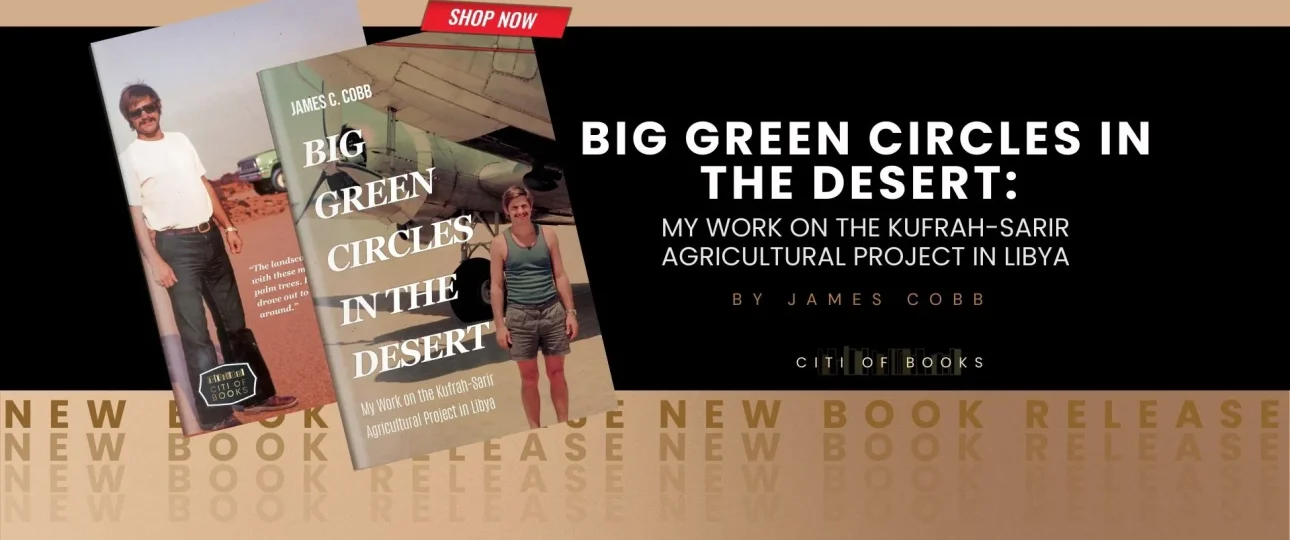
“Big Green Circles in the Desert: My Work on the Kufrah-Sarir Agricultural Project in Libya” by James Cobb is a captivating memoir that takes readers deep into the heat, dust, and drama of the 1970s Middle East and North Africa. Told through the eyes of a young American geologist—the author himself.
Some books make you feel like you’re right there in the moment—and “Big Green Circles in the Desert” does exactly that. From the very first chapter, you’re pulled into the scorching heat of the Sahara, the tension of working in politically unstable regions, and the excitement of being part of something completely new. This isn’t just a story about geology or agriculture—it’s about what happens when you say yes to an unexpected opportunity and it changes your life forever.
What makes this book so engaging is how real it feels. James C. Cobb doesn’t sugarcoat the fear of getting lost in the desert, the culture shock, or the pressure of working where mistakes could be deadly. Yet alongside those challenges are moments of awe, humor, and connection—sharing meals, learning new customs, and realizing that people across the world often want the same basic things: safety, purpose, and respect.
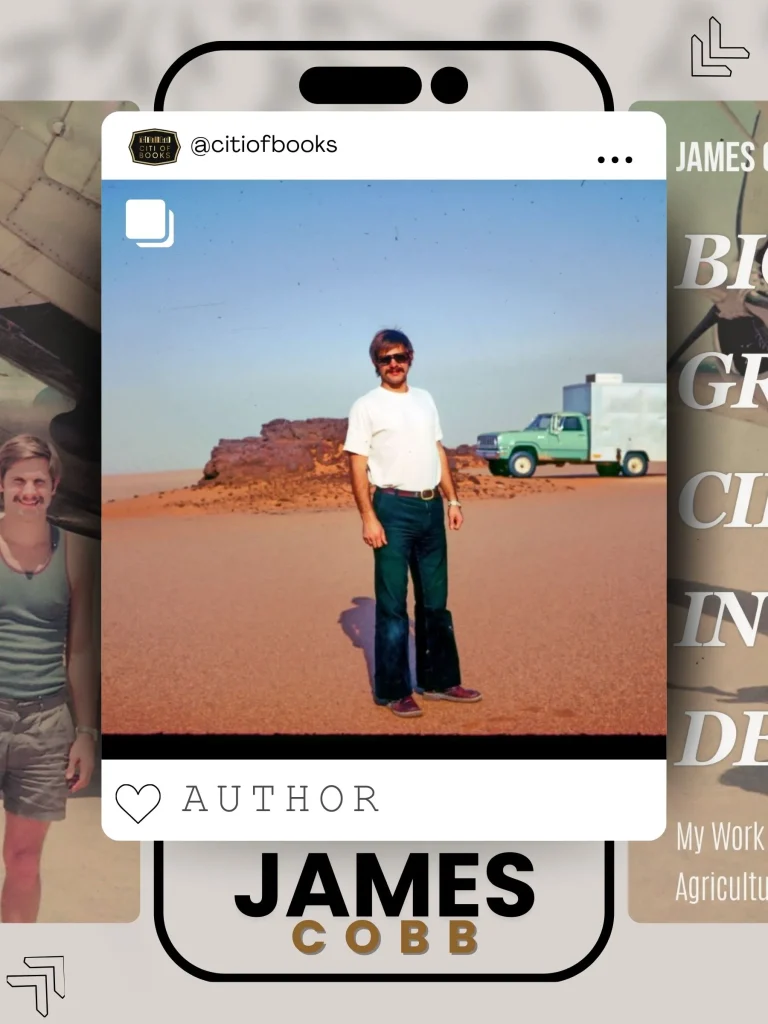
The story begins in Beirut in 1974, where Cobb accepts a position with Foster & Associates, a geophysical consulting firm. Through vivid, often humorous observations, he paints a portrait of Beirut’s golden age—a city both modern and volatile, brimming with charm yet teetering on the edge of sectarian conflict. Cobb’s anecdotes capture encounters with CIA legacies, PLO militants, and colorful expatriates, offering a time capsule of a world about to unravel as Lebanon slides toward civil war. His transfer to Libya soon after thrusts him into another complex landscape—one ruled by Colonel Muammar Qaddafi, where geopolitics, science, and survival collide.
Some of the memoir’s most intense moments occur when Cobb and his driver lose their way during a desert crossing, finding themselves stranded without food or water. His account of this ordeal is both harrowing and deeply human, revealing the razor-thin line between adventure and catastrophe. Once safely at the Kufrah–Sarir project site, Cobb immerses himself in the technical and cultural challenges of desert life, working alongside teams from Yugoslavia, Pakistan, and Libya. Through sandstorms, bureaucratic red tape, and long nights under an endless desert sky, he finds both hardship and camaraderie.
Yet, beyond the science and survival, “Big Green Circles in the Desert” is a story of awakening—of seeing the world in all its complexity. Cobb reflects on cultural divides, political hypocrisy, and the resilience of ordinary people amid global power struggles. His time in Libya unfolds against a backdrop of international tension, from the closing of the U.S. embassy to U.N. inspections and Qaddafi’s growing influence.
The memoir closes on a reflective note as Cobb leaves Libya, reunites with his future wife, and considers how his time in the desert shaped his view of humanity and progress. The epilogue ties his story to Libya’s later Great Man-Made River Project, a real-world continuation of the same aquifer system he once studied. Altogether, “Big Green Circles in the Desert: My Work on the Kufrah-Sarir Agricultural Project in Libya” is more than a memoir—it’s a thoughtful blend of travel writing, science, and personal growth that captures both the spirit of exploration and the complexity of working at the crossroads of culture, politics, and survival.
“Big Green Circles in the Desert: My Work on the Kufrah-Sarir Agricultural Project in Libya” by James Cobb is now available for purchase below: